




power, heat and soil
Sustainability
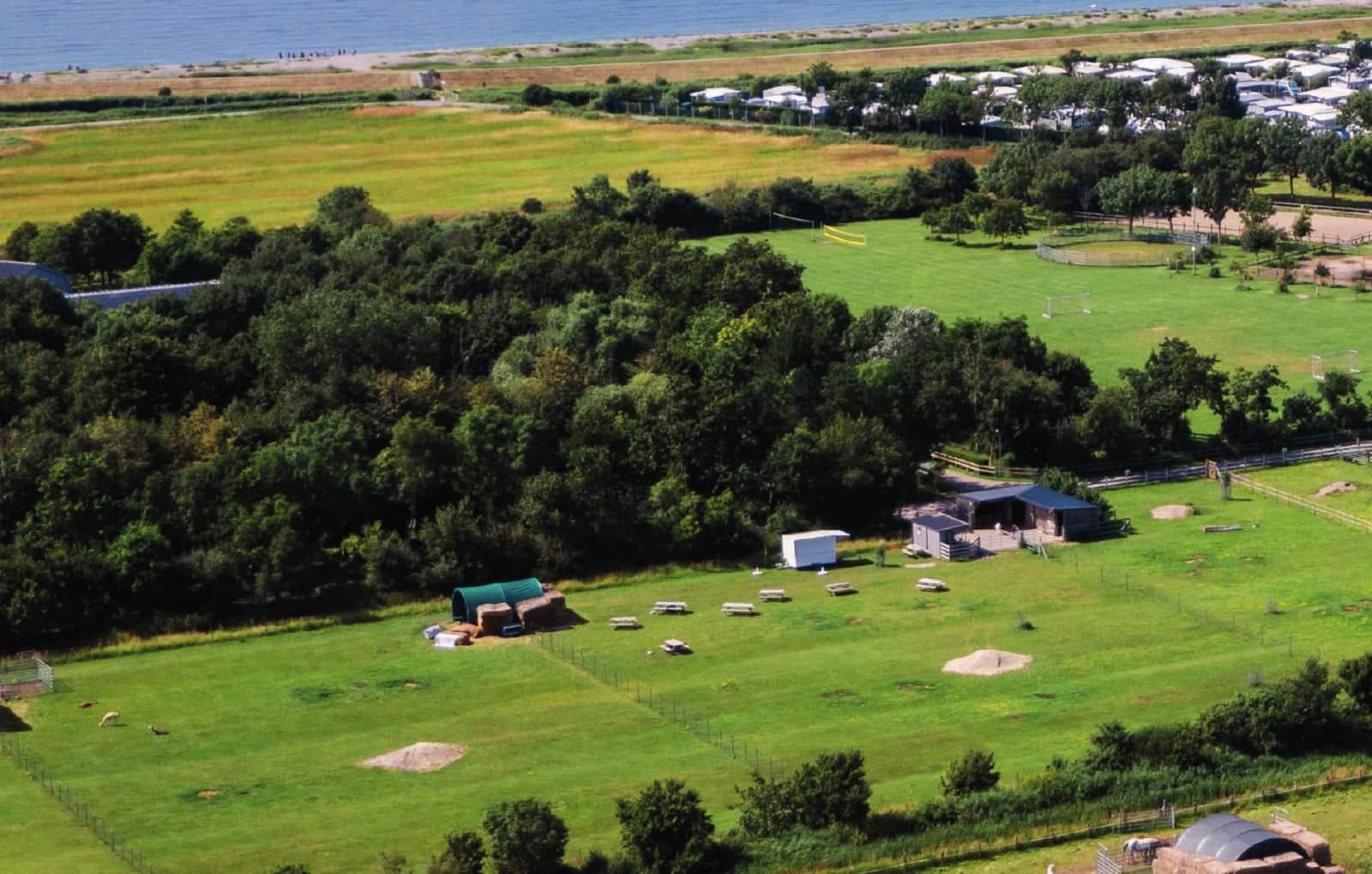
Our own power from the roofs, heat from the combined heat and power unit, and a refrigeration system that warms the shower water: most of what we use here, we generate ourselves.
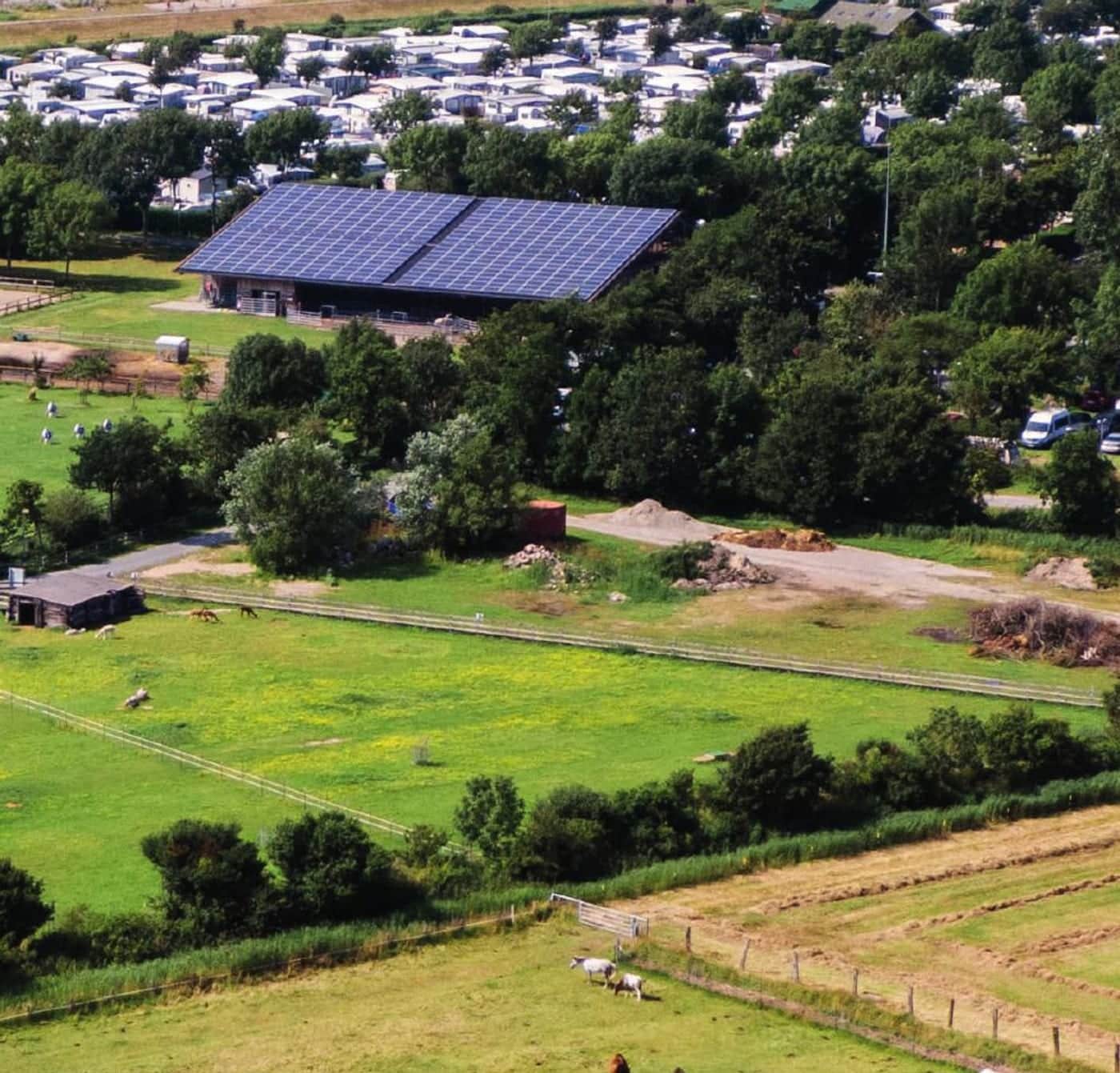
Power and heat from our own groundsPV arrays and a CHP unit
There are photovoltaic arrays on the roofs, and a combined heat and power unit that produces electricity and heat in one pass. Whatever we need beyond that we buy as green electricity. Physically it cannot be separated from any other electricity: what comes out of the cable is whatever the grid is carrying. The difference lies in the accounting. For every kilowatt hour we buy, there is a kilowatt hour that went into the grid from renewable sources somewhere else, and the matching guarantee of origin is cancelled for it.
The sanitary buildings run on solar thermal and district heating. Part of that heat comes from a heat pump that takes the waste heat from the refrigeration machines in the restaurant building: what the cooling gives off then heats the shower water. That is not a side effect but the reason the system was built this way.
None of it changes anything about your comfort. Hot water runs as long as you shower, and the electricity at the pitch is included in the price. What differs is where it comes from: our own roofs, our own CHP unit, the waste heat from the refrigeration, and the rest from the grid.
What else happens on the groundsareas, animals, soils
Areas left for insects
Parts of the grounds are not mown but left standing: wild bees and other insects find food there long after the short lawns have nothing left to offer.
Orchard meadow
Standard fruit trees on meadow rather than in rows. They take decades to bear, which makes them exactly the sort of planting you either do early or not at all.
Manure instead of mineral fertiliser
The grassland and pasture are fertilised with the manure of our own animals. The nutrients stay in the cycle instead of being manufactured and hauled in at some energy cost.
Collected separately
The disposal point takes household waste by fraction. Separating it is required anyway; how well it works still depends on each person. Sorting carefully saves us the re-sorting, and the bins aren't lined up for nothing.
What you can do yourselfin short
- Separate your waste: the disposal point is sorted by fraction
- Charge electric cars on the car park in front of the site, not at the pitch post
- Keep to the paths where areas have been left standing for insects
- Turn the tap off while you soap up: the heat comes partly from recovery, the drinking water still comes from the mains